MWI wordt het Nationaal Influenza Centrum

Influenza is nog steeds een wereldwijde ziektelast die 5-15% van de bevolking over de hele wereld treft. Het gaat dan vooral om personen in de hoge risicogroepen (zeer jonge kinderen, ouderen en mensen met onderliggende medische aandoeningen).

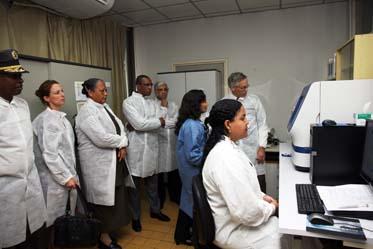
Het Medisch Wetenschappelijk Instituut (MWI) voert sinds 2009 laboratoriumtesten uit voor het Nationaal Influenza Programma. Op 23 september 2015 heeft het Ministerie van Volksgezondheid het MWI aangewezen als het Nationaal Influenza Centrum (NIC) voor Suriname, met Prof. Dr. Malti R. Adhin als coördinator. Het MWI zal als Nationaal Influenza Centrum een schakel zijn tussen de WHO en het land van herkomst bij alle vragen over virologische en epidemiologische surveillance van Influenza en andere respiratoire virussen.

De Influenza surveillance in Suriname bestaat uit bewaking van ernstige acute respiratoire virussen (SARI) en zal in 2016 ook de bewaking van influenza-achtige (ILI) ziektebeelden bevatten. De SARI sentinel sites zijn: het ‘s Lands Hospitaal (LH), het Lachmipersad Mungra Streekziekenhuis Nickerie (LMSZN) en de intensive care van het Academisch Ziekenhuis Paramaribo (AZP-ICU). De ILI sentinel sites zullen zijn: de polikliniek van drs. A. Voigt te Paramaribo en de regionale gezondheidscentra in de districten Commewijne en Wanica (Lelydorp). Het MWI zal als NIC klinische monsters blijven testen voor de nationale surveillance van acute respiratoire virussen en zal ook monsters testen in het kader van de surveillance van influenza achtige ziektebeelden.

Naast het opsporen en subtyperen van Influenza virussen voor alle surveillance monsters zal het MWI ook moleculaire testen implementeren voor zes andere respiratoire virussen: Para-influenza 1, 2 en 3, het humaan metapneumovirus, het respiratoir syncytieel virus en het adenovirus. Regelmatige analyse en rapportage via de web-based online systemen van de WHO (WHO FluNet en WHOFluID), zal influenza specialisten wereldwijd continu voorzien van informatie over de activiteit van influenza en influenza achtige ziektebeelden in Suriname en zal ook tijdige reacties op uitbraken of circulatie van ongebruikelijke virussen mogelijk maken.

Een derde functie van het NIC is virus isolatie van lokaal verzamelde klinische monsters. Deze techniek, die nieuw is voor Suriname, zal worden opgezet in samenwerking met het Center of Disease Control (CDC). In de toekomst zullen geïsoleerde virus monsters worden verzonden naar het CDC. De tijdige verstrekking van influenzavirus isolaten biedt het Global Influenza Surveillance Netwerk van de WHO de optie om isolaten die in Suriname circuleren ook op te nemen in de influenzavirus samenstelling van het influenza vaccin voor het komende griepseizoen.
Het MWI zal als NIC Suriname op die manier bijdragen aan de verbetering van nationale en wereldwijde influenza preventie- en bestrijdingsmaatregelen.
MWI becomes the National Influenza Center

Influenza is still a worldwide burden, targeting 5-15% of the population worldwide, primarily in the high risk groups (very young children, the elderly and people with underlying medical conditions). The Medical Scientific Institute (MWI) has been performing laboratory testing for the national Influenza program since 2009. On 23 September 2015, the Ministry of Health designated MWI as the National Influenza Center (NIC) for Suriname with Prof. Dr. Malti R. Adhin als NIC Coordinator. MWI as NIC will serve as link between the WHO and the country of origin in all questions relating to virological and epidemiological surveillance of Influenza and other respiratory viruses.

The Influenza surveillance in Suriname consists of surveillance for Severe Acute Respiratory Viruses (SARI) and will in 2016 also include surveillance for Influenza Like Illnesses (ILI). The SARI sentinel sites are: ‘s Lands Hospitaal (LH), Lachmipersad Mungra Streekziekenhuis Nickerie (LMSZN) and the Intensive Care Unit of the Academisch Ziekenhuis Paramaribo (ICU-AZP). The ILI sentinel sites will be the private practice of drs. A. Voigt in the capitol Paramaribo, the regional health centres (RGD) in urban, rural districts Commewijne and Wanica (Lelydorp). MWI as NIC will continue to test clinical samples from the national surveillances for Severe Acute Respiratory Viruses (SARI) and will also test the samples from the surveillance for Influenza Like Illnesses (ILI).

Besides detecting and subtyping Influenza viruses for all surveillance samples, MWI will also implement molecular testing for six other respiratory viruses (ORV); Para-influenza 1, 2, 3, Human Metapneumovirus, Respiratory Syncytial Virus (RSV) and Adenovirus. Regular analysis and reporting through the WHO web-based online systems WHO FluNet and WHOFluID, will provide influenza specialists worldwide with continuous information on the activity of Influenza and Influenza like illnesses in Suriname and will also enable timely responses on outbreaks or circulation of unusual viruses.

A third function of the NIC is the virus isolation of locally collected clinical specimens. This technique, which is new for Suriname will be set up in collaboration with the Center of Disease Control (CDC) and in the future, isolated virus samples will be shipped to CDC. The timely provision of influenza virus isolates offers the WHO Global Influenza Surveillance Network the option to include isolates circulating in Suriname in the influenza virus composition of influenza vaccine for the next influenza season. MWI as NIC Suriname will thus contribute to improve national and global influenza prevention and response measures.

Australian Court orders manufacturer Reckitt Benckiser to remove some of its Nurofen-boxes from Australian shelves

The painkillers were put on the market for specific types of pain, but the different boxes contained the same active ingredient and dose. The judge, who passed judgement in this case on December 14,  found this misleading for consumers. The lawsuit was brought by the Australian Competition and Consumer Commission, the supervisor of the market. “Consumers buy these products because they think these products treat some kind of pain, but that is not the case,” chairman Rod Sims told The Guardian.

The Nurofen packages containing painkillers for back pain, menstrual pain, tension headache and migraine should be taken off the shelves within three months. The manufacturer has admitted in court that the boxes contained the same pills, even though different kinds of pain were mentioned on the outside of the boxes. The only thing that was different was the price, because Nurofen for specific types of pain costs almost twice as much as the standard Nurofen containing just ibuprofen. That is misleading, says the judge. All four products contain 400 g ibuprofen and they have the same excipients.

De Australische rechter dwingt fabrikant Reckitt Benckiser om een deel van zijn Nurofen-doosjes uit de schappen te halen

De pijnstiller was voor verschillende soorten pijn in de markt gezet, terwijl de verschillende doosjes dezelfde werkzame stof en dosis bevatten. Dat is misleidend voor de consument vond de rechter, die 14 december uitspraak deed in deze zaak. De rechtszaak was aangespannen door de Australische Competition and Consumer Commission, de toezicht-houder op de markt. ‘Consumenten kopen deze producten omdat ze denken dat ze een bepaalde pijn behandelen, terwijl dat niet het geval is’, aldus voorzitter Rod Sims tegen The Guardian.

De verpakkingen met Nurofen rugpijn, Nurofen menstruatiepijn, Nurofen spannings-hoofdpijn en Nurofen migraine moeten binnen drie maanden uit de schappen gehaald worden. De fabrikant had in de rechtszaak toegegeven dat de doosjes dezelfde pillen bevatten, ook al stonden er verschillende pijnsoorten op de buitenkant. Wat wel verschilde was de prijs, want de Nurofen voor specifieke vormen van pijn kost bijna twee keer zoveel als de standaard-Nurofen met gewoon ibuprofen. Dat is misleidend, vindt de rechter.

In Suriname is Nurofen ook op de markt (bijvoorbeeld te koop bij DIO). Beide producten bevatten 400 g ibuprofen en ze hebben dezelfde hulpstoffen. Ze zijn ook wat duurder dan de standaardverpakking.

Roken belangrijke risicofactor voor reumatoïde artritis

icon2Verschillende risicofactoren spelen een rol bij het ontstaan van reumatoïde artritis (RA), waaronder genetische factoren, eetgewoonten, maar met name roken. De exacte oorzaak is echter nog onbekend. Door de ziekte in een vroeg stadium te ontdekken, zou het effectiever bestreden kunnen worden. Dit stelt hoogleraar reumatologie Dirkjan van Schaardenburg in zijn oratie op 26 november. De manier waarop roken invloed heeft op reumatoïde artritis is niet exact bekend. Van Schaardenburg: ‘Wel bekend is dat het voor een derde van de gevallen verantwoordelijk is en dat het schade veroorzaakt op drie niveaus: het zorgt voor een hogere incidentie, een ernstiger beloop en verslechtert ook nog de reactie op medicatie.’ Er zijn aanwijzingen dat RA pas zo’n vierhonderd jaar voorkomt in Europa, ongeveer even lang als dat er hier tabak gebruikt wordt. Daarbij is het opvallend dat, wanneer we terugkijken op de afgelopen eeuw, het voorkomen en de ernst van RA parallel lijkt te lopen met de stijging en later weer daling van de sigarettenconsumptie. De genetische bijdrage wordt geschat op zo’n 16 procent. De sterkste genetische risicofactor voor RA wordt aangeduid als HLA-SE en komt bij ongeveer 35 procent van de Europeanen voor. Uit onderzoek is gebleken dat bij de aanwezigheid van dit gen, het effect van roken toeneemt.

Volgens van Schaardenburg wordt RA door de factoren genen en tabaksgebruik nog slechts voor de helft verklaard en is het aannemelijk dat voeding voor een groot gedeelte van die andere helft verantwoordelijk is. Hij wijst op verschillende onderzoeken waaruit is gebleken dat een dieet met een laag percentage verzadigde vetten, dierlijke eiwitten en suiker, dus een vooral plantaardig dieet, een indrukwekkende invloed kan hebben op het ontstaan en beloop van diverse moderne chronische ziekten, waaronder RA. Op dit gebied is volgens de hoogleraar dus nog een hoop winst te behalen. ‘De meeste mensen hebben nog dramatisch ongunstige eetgewoonten. De keuze voor voeding wordt te weinig als reële ondersteunende optie gegeven om RA tegen te gaan. Artsen zouden daar veel meer het voortouw in kunnen nemen door middel van voedingsadviezen, maar ook door het geven van het goede voorbeeld’.
Op dit moment wordt er onderzoek gedaan naar de vroege herkenning en behandeling van RA-patiënten. Vroege behandeling van RA leidt tot een betere prognose en het zou dus gunstig zijn om patiënten nog op te sporen voordat de patiënten gewrichtsontstekingen krijgen. Dit is mogelijk door te screenen op reumafactor (RF) of anti-gecitrullineerd-eiwit-antilichamen (ACPA), die voorkomen bij ruim de helft respectievelijk driekwart van de reumapatiënten. Voor screening op grote schaal is de test nog niet geschikt. ‘Bevolkingsonderzoek leidt tot hoge kosten en nogal wat onjuiste voorspellingen, waardoor de test momenteel alleen nog wordt gebruikt bij personen met een verhoogd risico’, zegt Van Schaardenburg. Onderzoekers van Reade en het AMC zijn bezig om aan de hand van praktijkregistraties van huisartsenpraktijken te kijken bij welke klachtencombinaties de patiënten uiteindelijk de diagnose RA krijgen en voor wie het dus zinvol is om te screenen. Ook wordt er geprobeerd om de ziekte te voorkomen door invloed uit te oefenen op het immuunsysteem. Dit heet het opwekken van tolerantie en is nog niet gelukt. Toch is Van Schaardenburg positief over het toekomstperspectief: ‘Met een mix van leefstijlwijziging, opwekken van tolerantie en slimme medicatieschema’s verwacht ik dat we de komende jaren weer belangrijke stappen zullen kunnen zetten op weg naar uiteindelijk het einde van reumatoïde artritis.’

© KNMG

Smoking is a major risk factor for rheumatoid arthritis

icon2

Several risk factors play a role in the development of rheumatoid arthritis (RA), including genetic factors, eating habits, but in particular smoking. However, the exact cause is still unknown. By detecting the disease at an early stage, it could be combated more effectively.
This is stated by professor of rheumatology Dirkjan Schaardenburg in his inaugural lecture on November 26. The way in which smoke has an impact on rheumatoid arthritis is not exactly known.
Van Schaardenburg: “It is known that it is responsible for one third of the cases and that it causes damage on three levels: it provides a higher incidence, more serious symptoms and it also worsens the response to medications.” There are indications that RA occurs only about four hundred years in Europe, about as long as tobacco is used here.
It is striking that, when we look back at the past century, the incidence and severity of RA appears to run parallel with the rise and later fall in cigarette consumption. The genetic contribution is estimated at about 16 percent. The strongest genetic risk factor for RA is called HLA-SE and occurs in about 35 percent of Europeans. Research has shown that when this gene is present, the effect of smoking increases.
According to van Schaardenburg only half of RA cases are explained by the factors genes and tobacco and it is likely that nutrition is responsible for a larger part of the other half. He mentions several surveys which revealed that a diet low in saturated fats, animal protein and sugar, so a mostly plant-based diet, may have an impressive influence on the development and course of several modern chronic diseases, including RA. So according to the professor, a lot of gains could still be made in this area.
“Most people still have dramatically bad eating habits. The choice of nutrition is not often given as a real supportive option to tackle RA. Physicians ought to take the lead in this by means of dietary advice, but also by setting a good example.”
Currently research is being conducted into the early recognition and treatment of RA patients. Early treatment of RA leads to a better prognosis and it would therefore be beneficial to identify patients even before they get arthritis. This is possible by screening for rheumatoid factor (RF) or anti- citrullinated protein antibodies (ACPA), which occur in more than half respectively three quarters of rheumatoid arthritis patients.
The test is still not suitable for large-scale screening. “Population screening leads to high costs and a lot of incorrect predictions, so the test is currently only used in people at high risk,” says Van Schaardenburg.
By analyzing patient data registration of general practitioners, researchers of Reade and the AMC are trying to see which combinations of complaints eventually lead to the RA diagnosis and thus making it useful to screen these patients.
An effort is also being made to prevent the disease by influencing the immune system. This is called the induction of tolerance and has not yet succeeded. Still Van Schaardenburg is positive about the prospect for the future: “With a mixture of lifestyle modification, induced tolerance and smart medication schedules I expect that in the coming years, we will be able to take major steps towards finally ending rheumatoid arthritis”

© KNMG

Medisch Wetenschappelijk Instituut speelt in op Chikungunya

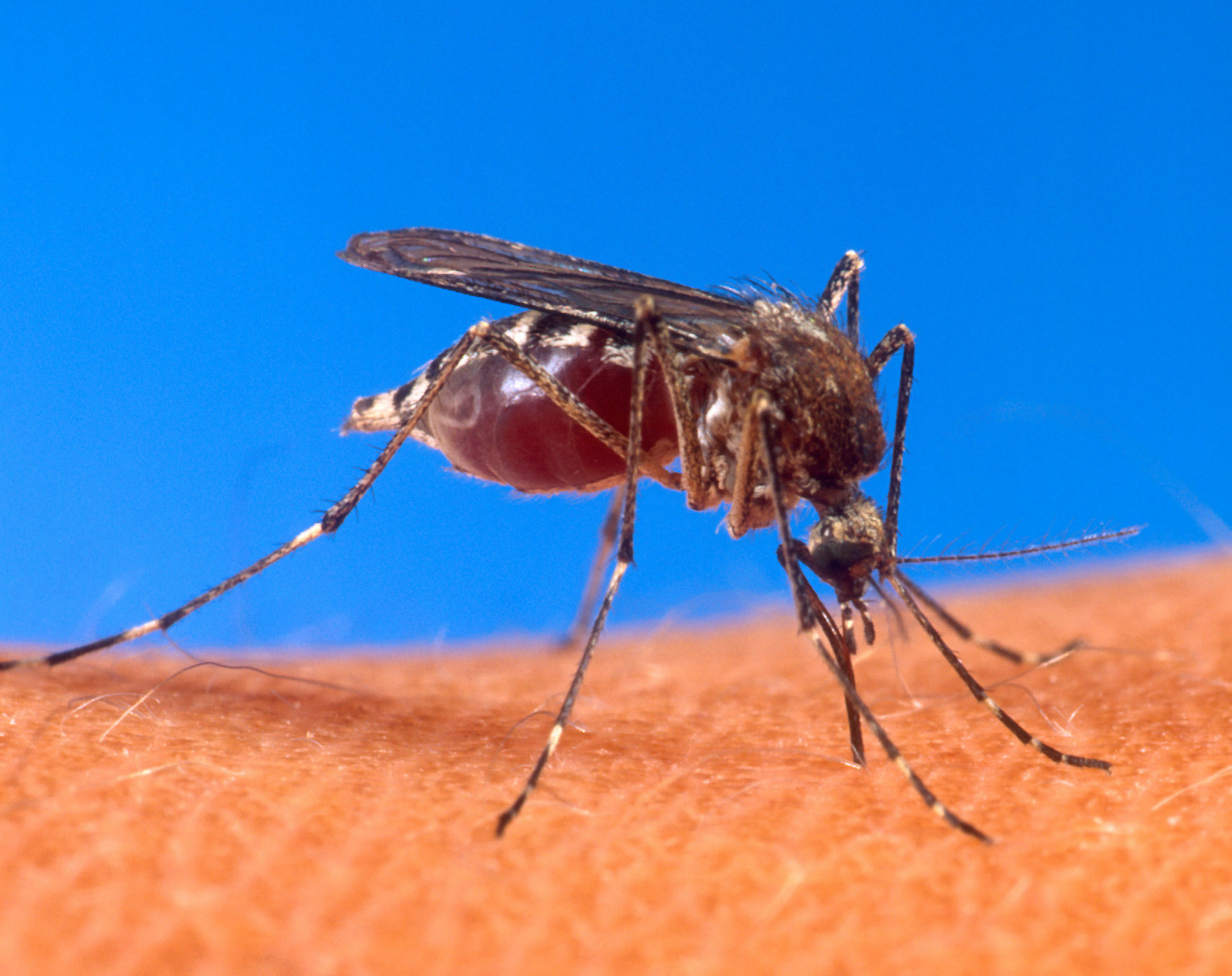
Aedes_aegypti_biting_humanIn het kader van de recente opmars van het Chikungunya virus (CHIKV) in de regio heeft het Medisch Wetenschappelijk Instituut geantici-peerd op de noodzaak voor Suriname voor be-trouwbare testmogelijkheden, zodat een even-tuele uitbraak zo snel mogelijk kan worden gedetecteerd.

Het Chikungunya virus is een RNA virus, dat kan worden overgebracht door de muskieten Aedes aegypti en Aedes albopictus, die ook in Suriname voorkomen en tevens verantwoordelijk zijn voor de verspreiding van Dengue. De symptomen zijn: plotseling opkomende koorts en ernstige gewrichts-pijnen. Andere veel voorkomende symptomen zijn hoofdpijn, spierpijn, vermoeidheid, duizeligheid en uitslag. De meeste patiënten herstellen binnen een week maar in sommige gevallen kunnen de gewrichtspijnen maanden en soms zelfs jaren persisteren. Momenteel bestaat nog geen medicatie of vaccine om Chikungunya te voorkomen. De ziekte werd reeds in 1952 beschreven in Tanzania en uitbraken komen voor in Afrika en Azië. De eerste rapportage vanuit Europa dateert van 2007 en op 6 december 2013 is het virus ook in de Amerika’s opgedoken. Sindsdien zijn gevallen gerapporteerd vanuit verschillende Caraïbische eilanden en recent ook vanuit Frans Guyana en nu ook in buurland Guyana.

In samenwerking met het Rijksinstituut voor Volksgezondheid en Milieu (RIVM), Nederland is in het MWI op initiatief van en onder verantwoordelijkheid van prof. dr. Malti R. Adhin de Reverse Transcriptase Real Time PCR (RT-PCR) assay opgezet voor Chikungunya detectie. De validatie van de test is geschied op een panel afkomstig van het RIVM met onbekende monsters. De overeenkomst met het RIVM voor de panel resultaten was 100%, waarbij bovendien qua sensitiviteit geldt dat het MWI tot dezelfde verdunning als het RIVM, CHIKV-RNA kan aantonen. Deze kwantitatieve test is vanaf 23 mei 2014 beschikbaar en hiermee zijn wij in staat om al vanaf de eerste ziektedag het Chikungunya virus in klinisch materiaal aan te tonen. Deze test biedt het Ministerie van Volksgezondheid de mogelijkheid om in Suriname zelf te kunnen testen bij te organiseren surveillance activiteiten en snelle diagnose zou cruciaal kunnen blijken bij een eventuele uitbraak en bij besluitvorming voor maatregelen ter voorkoming van verspreiding. Met de introductie van deze test geeft het MWI verder invulling aan haar wetenschappelijke en dienstverlenende rol in de gemeenschap en in het bijzonder voor het gezondheids-zorgsysteem in Suriname.

Na de eerste twee import gevallen in Suriname (7 juni en 19 juni) is het Chikungunya virus inmiddels ook gedetecteerd in personen zonder reisgeschiedenis.

Het Centraal Laboratorium heeft  per 26 juni het test algorithme aangepast, waarbij alleen materiaal wordt getest van gehospitaliseerde suspecte Chikungunya gevallen. Vanaf 23 september wordt voor het Centraal Laboratorium de diagnostiek uitgevoerd voor patienten met een onset van vijf dagen of minder.

Het Medisch Wetenschappelijk Instituut is in samenwerking met de PAHO op 6  augustus gestart met een dagelijkse CHIKV surveillance bij een particuliere huisartsenpraktijk in Paramaribo, een RGD kliniek in Commewijne en des zondags bij de Spoedeisende Hulp (AZP), teneinde inzicht te verkrijgen in Chikungunya trends in Suriname.

Medical Scientific Institute responds to Chikungunya

Aedes_aegypti_biting_human

In the context of the recent emergence of the Chikungunya virus (CHIKV) in the region, the Medical Scientific Institute anticipated the need for reliable testing capabilities in Suriname, so that any outbreak can be detected as soon as possible. The Chikungunya virus is an RNA virus, transmitted by the Aedes aegypti and Aedes albopictus mosquitoes who are also present in Suriname and also responsible for the spreading of Dengue. The symptoms are sudden fever and severe joint pain. Other common symptoms include headache, muscle aches, fatigue, dizziness and rash. Most patients recover within a week, but in some cases, the joint pain may persist for months and even years. Currently, there is no medication or vaccine to prevent Chikungunya.
The disease was described in 1952 in Tanzania and outbreaks occur in Africa and Asia. The first report from Europe dates from 2007 and on December 6 2013, the virus had also surfaced in the Americas. Since then, cases have been reported from various Caribbean islands and recently also from French Guyana and neighboring Guyana.
In collaboration with the National Institute for Public Health and Environment (RIVM) of the Netherlands and initiated and supervised by Prof. dr. Malti R. Adhin, the Medical Scientific Institute has set up the Reverse Transcriptase Real Time PCR (RT-PCR) assay for Chikungunya detection. The validation of the test was done on a panel from the RIVM with unknown samples. The agreement with the RIVM for the panel results was 100%, where furthermore in terms of sensitivity the Medical Scientific Institute must prove CHIKV-RNA to the same dilution as the RIVM. This test is available starting May 23 2014, and with that we are able to demonstrate the Chikungunya virus in clinical material from day one of the illness. This test gives the Ministry of Health the opportunity to perform the test themselves during surveillance activities and rapid diagnosis could prove crucial in a possible outbreak, and decisions on measures to prevent the spread. With the introduction of this test the Medical Scientific Institute gives more substance to its scientific and service role in the community and in particular for the health care system in Suriname.
After the first two import cases in Suriname (June 7 and June 19), the Chikungunya virus has also been detected in people with no travel history. The Central Laboratory has per June 26 changed the test algorithm, testing only material from hospitalized suspicious Chikungunya cases. As of September 23, for the Central Laboratory diagnostics is performed for patients with an onset of five days or less.
On August 6, in partnership with the PAHO, the Medical Scientific Institute started a daily CHIKV surveillance in a private general practice in Paramaribo, a RGD clinic in Commewijne and on Sundays at the Emergency Room of the Academic Hospital, in order to gain insight into Chikungunya trends Suriname.

Medical Scientific Institute battles cervical cancer

The Medical Research Institute (MWI) has added the detection and characterization of the Human Papilloma Virus to its services. This virus is an important factor in cervical cancer. MWI Director Nico de Bel indicates that diagnostics and epidemiological data on infectious disease are usually lacking in Suriname. Within the MWI, the molecular laboratory of the Department of Biochemistry is responsible for detecting and identifying pathogens that are not detectable in Suriname such as the Dengue virus. This Department, supervised by prof. Dr. Malti R. Adhin, is responsible for the development and the use of tests in Suriname. With support from the Ministry of Health and UNFPA the department has set up a test system for molecular HPV detection and typification. The department can not only detect high risk types, but also the frequent low-risk types. The director goes on to state that “the fight against cervical cancer should also be conducted in Suriname; worldwide each year nearly 300,000 women die, mostly in developing countries. An early detection is of great importance for a successful treatment, because the development of the cancer may take about 10 to 15 years. Introduction of these diagnostics results in a timely deployment of the treatment, resulting in a reduction in the incidence of cancer and death from cervical cancer”.

The Medical Research Institute has also started scientific research on the prevalence of HPV in cervical cancer in Suriname. This study will not only provide an insight, but will also be used to get information for a conscious vaccination program. Lastly, Nico de Bel states: “With the introduction of this test capability in Suriname, in collaboration with the Faculty of Medical Sciences, the MWI directly contributes to improving health care. Doing applied research at the University is of importance for the community. “

Forensic DNA testing is now available in Suriname

The Forensic DNA laboratory of the Medical Research (MWI) Institute can now perform forensic DNA testing. With this, the Surinamese judiciary has gained access to a very powerful tool for presenting evidence. During the launch of the lab last month, various speakers expressed high expectations for the test results. Attorney General Subhaas Punwasi said that with the commissioning of the Forensic DNA Laboratory a higher resolving rate of criminal cases is to be expected. Nico de Bel, Director of the Institute sees the commissioning of the laboratory as a milestone for the Surinamese justice. Minister Edward Belfort was extremely pleased with our own forensic DNA laboratory and congratulated the MWI and especially Malti Adhin, head of the forensic DNA lab, with the achieved milestone. He also expressed his gratitude to the Dutch charge d’affaires and the US ambassador for their financial support.

Presenting hard evidence
The entire process of categorizing traces, isolating DNA, quantifying and multiplying DNA (using the Polymerase Chain Reaction PCR technology) and finally the DNA profiling/analysis is now done in Suriname. Initially biological traces like blood, saliva, semen and hair will be used. The comparison of DNA profiles of traces with possible suspects can now provide solid evidence in homicides, sexual offenses and even in burglaries. DNA evidence can not only be used as evidence to convict the guilty, but also as evidence to exonerate the innocent. In 2009 the work group ‘Surinamese Forensic Institute’ (SFI) was installed under the leadership of Attorny General Roy Baidjnath Panday, to prepare the establishment of the Surinamese Forensic Institute. The Ministry of Justice and Police indicates that the task of this Institute is to professionalize and expand the forensic research areas in Suriname. These include the fields of pathology, chemistry and ballistic research, together with the introduction of forensic DNA.

Advanced technology
DNA testing is an advanced technology, which requires not only high-tech equipment, separated and precisely controlled laboratory facilities, but also highly specialized expertise. In 2010, the Ministry of Justice and Police concluded an agreement with the Medical Scientific Institute to set up this process and with the NFI (Dutch Forensic Institute), a contract was signed to provide the necessary assistance. In October 2011 in collaboration with the Dutch Forensic Institute a validation process was started. The MWI successfully completed all three phases of the validation process successfully completed on 12 September 2012. In the last quarter of 2012, forensic trace seekers of the Police corps were trained.

The MWI has an independent position, good laboratory facilities and scientific experience. In its molecular laboratory DNA tests have already been done for health care .